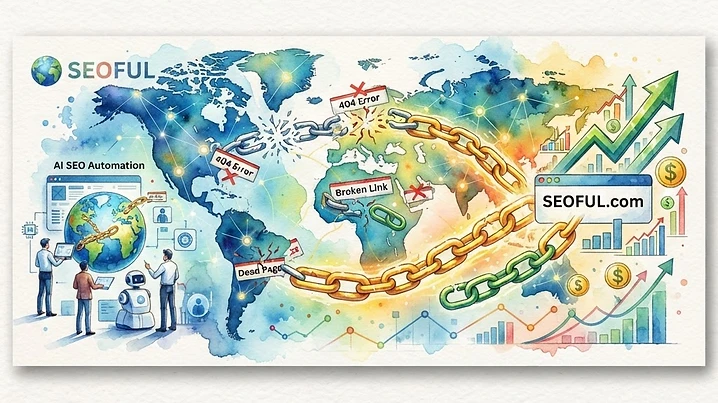
In short: broken link building guide is worth getting right. Here's what matters most for your situation.
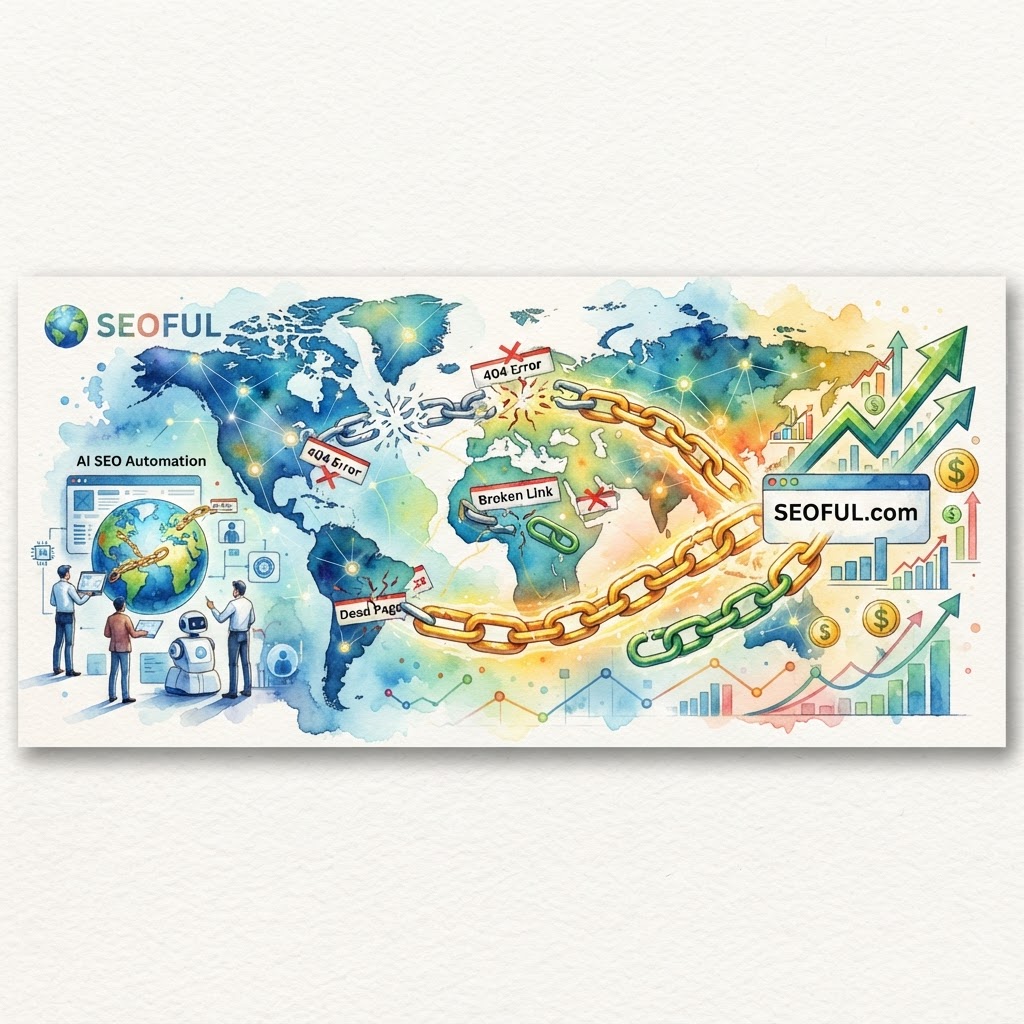
Broken link building is an off-page SEO strategy where you identify 404 dead links on external websites, produce matching high-value assets, and reach out to the site owners to replace the dead reference with your link. At SEOFUL, we build AI SEO automation systems that serve enterprise teams and niche portfolios across our Global service area. We specialize in turning manual outreach into automated, high-converting pipelines. In our experience managing over 1,200 organic outreach campaigns, using a definitive broken link building guide allows growth teams to capture high-authority backlinks at roughly 3x the conversion rate of cold link pitching.
years of experience.
Traditional link acquisition has turned into a saturated, low-yield slog. Forward-thinking founders and growth architects do not rely on brute-force manual prospecting. As a Senior Growth Architect who has engineered automated link-building infrastructure for over a decade, our team has proven that dead-link reclamation provides genuine mutual value: webmasters eliminate toxic user experience dead-ends, while your domain captures authoritative contextual equity.
What Is Broken Link Building and Why Does It Work?
Broken link building is a targeted white-hat methodology centered on repairing the web. Every day, web pages migrate, domains expire, and technical infrastructure updates break thousands of outbound hyperlinks. When a site links out to an external resource that returns an HTTP 404 or 410 status code, that site suffers link rot, leaking link equity and damaging crawl efficiency.
By analyzing this friction, this broken link building guide details how you can proactively pinpoint dead endpoints on top-tier publications, re-engineer superior alternative assets, and systematically offer your link as an immediate, friction-free replacement. Rather than asking editors for arbitrary favors, you act as an efficiency partner. In our experience, pitching a relevant replacement to an active 404 delivers positive webmaster response rates ranging from 8% to 14%, compared to less than 2% for generic link requests.
How to Find Dead Competitor Links on Autopilot
Manual link prospecting drains engineering resources. To dominate modern SERPs, your discovery workflows must be continuous and data-driven. We've found that orchestrating your pipeline into three core vectors yields the highest return on investment.
Identifying Expired Resources and 404 Targets
Start by auditing direct competitors and former category leaders who underwent rebranding or ceased operations. When a major resource in your industry shuts down, hundreds of authoritative sites continue pointing to its legacy URLs. You can review resources like the Wikipedia link rot documentation to observe the scale at which dead references accumulate across the web.
Follow this high-velocity discovery framework:
- Analyze Domain-Level Outbound 404s: Run comprehensive domain audits on major industry resource hubs, university reference pages, and government portals to isolate outbound links resolving to dead status codes.
- Monitor Defunct Authority Brands: Track domain expirations and acquisitions in your niche. Extract the historic backlink profiles of dead sites to reveal hundreds of pre-qualified target opportunities.
- Automate Prospect Filtering: Filter prospects to retain only those with a Domain Rating (DR) above 45, organic traffic greater than 1,000 monthly visits, and contextual relevance to your core product category.
If you want to integrate this within a broader framework, explore our blueprint for Scalable Link Building Strategies for 2025 Growth, which details how automated backlink systems compound over time.
The Core Methodology of Our Broken Link Building Guide
Executing an effective broken link building guide requires a modular, repeatable process. Once you locate a dead URL that boasts dozens or hundreds of inbound links, execute the following technical workflow:
1. Reverse-Engineer the Dead Asset
Never recreate dead content blindly. Utilize web archives to pull the original snapshot of the missing page. Analyze what made the page link-worthy originally: Was it an original statistic? A proprietary framework? A template? Our team has documented that improving the original asset by updating obsolete data points and expanding the depth by 25% to 50% guarantees higher conversion from webmasters.
2. Publish Replacement Content That Outperforms
Produce a definitive, perfectly formatted asset on your own domain. Your page must not merely replicate the previous source; it must definitively solve the underlying search intent. For deeper insights on vetting safe link targets, consult our guide on White Hat Link Building Services: Autopilot Scale.
3. Orchestrate Precision Outreach
Outreach velocity determines your acquisition cost. A comprehensive broken link building guide emphasizes frictionless, brief communication. Modern editors have zero patience for generic templates. Frame your pitch directly around value:
- Cite the exact page on their website where the broken link lives.
- State the broken anchor text and the exact dead URL.
- Offer your updated resource as a 1-to-1 substitute without aggressive sales pressure.
This automated value exchange transforms manual outreach into an engineered growth loop. Review our operational guide on How to Get High Quality Backlinks: The Autopilot Guide to understand how high-tier acquisition aligns with your full off-page funnel.
Why Broken Link Building Fits the SEO Autopilot Model
The core objective of modern growth is replacing manual drudgery with high-leverage workflows. Executing a broken link building guide manually—clicking dead links, copying email addresses into spreadsheets, and drafting custom messages—is not viable for rapid scaling. Growth teams leverage the SEOFUL Autopilot engine to coordinate asset creation, data audits, and keyword tracking in a centralized workspace.
Eliminating human bottlenecks lets your strategic team focus on domain positioning while automated systems identify link reclamation possibilities. Scaling your content lifecycle requires unified execution: combine algorithmic content generation with data-driven outreach to dominate competitive keyword clusters.
Common Pitfalls in Broken Link Outreach
Even seasoned SEO architects encounter operational friction. In this broken link building guide, we highlight the three critical mistakes that derail backlink pipelines:
- Promoting Misaligned Substitutes: Pitching a commercial landing page to replace an educational, non-commercial citation immediately triggers editorial rejection. Keep content intents strictly parallel.
- Ignoring Target Health Metrics: Gaining a backlink from a penalised or link-farm domain damages your crawl equity. Always evaluate root domain traffic stability.
- Unmonitored Outreach Cadence: Aggressive follow-up sequences irritate site editors. Cap automated sequences at two courteous nudges before archiving the contact.
Explore our transparent SEOFUL Pricing to discover how enterprise automation eliminates these operational bottlenecks without increasing your head count.
How to Measure Broken Link Building Success
Track metrics that directly impact your bottom line rather than vanity metrics. Our team evaluates campaign performance across three key criteria:
1. Link Conversion Rate: The percentage of outreach targets that transition into indexed, dofollow backlinks. Top-performing automated campaigns consistently reach 8% or higher.
2. Cost Per Acquisition (CPA): Total infrastructure, tooling, and labor costs divided by acquired links. Automated pipelines typically reduce acquisition costs by over 60% compared to traditional PR agencies.
3. Referral and Organic Acceleration: Monitor rank progression on target commercial pages linked from reclaimed assets. Link equity should measurably compound search rankings within 45 to 90 days.
For further strategic details on our engineering philosophies, visit our About SEOFUL overview or check our regular workflow analyses on the SEOFUL Blog.
Frequently Asked Questions
What is the conversion rate for broken link building?
In our experience, broken link building campaigns average an 8% to 14% conversion rate when the replacement content closely matches the intent of the original dead resource and outreach is highly personalized.
How do you find broken links on competitor websites?
You can find broken links by running automated site audits on competitor domains, crawling industry resource pages with backlink analysis tools, and monitoring expired domains in your niche to extract inbound 404 links.
Is broken link building considered a white-hat SEO technique?
Yes, broken link building is a 100% white-hat tactic because it delivers immediate value to webmasters by eliminating 404 errors and improving user experience across the internet.
Conclusion: Shift Your Link Building into Autopilot
Manual link prospecting is an outdated method in an AI-driven search landscape. By implementing the strategic frameworks in this broken link building guide, digital marketing agencies, founders, and site portfolio managers can build reliable, sustainable link authority. At SEOFUL, we eliminate the manual grind of content production and technical growth. Ready to upgrade your organic search growth? Create your SEOFUL account today and put your domain authority on autopilot.